Communication high rises perform not stop working with dignity. When a mast leans or even a guy anchor creeps, you feel it in the coax, in the placement of microwave recipes, in interference issues, as well as in the overtime bill when crews rush to decommission as well as re-rig. Dirt is actually often at the center of that account. The peaceful utility vehicle stopping these headaches is actually the base unit, and also for numerous sites, helical anchors supply the right blend of capacity, rate, and also of a routine. They are certainly not a cure‑all, however they address a ton of side instances that typical drilled shafts and escalate grounds have problem with, particularly on remote, soft, or even eco delicate ground.
This item sets out how helical anchors and also related bodies match the world of towers as well as commercial poles, where they sparkle, and also where various other choices like micropiles or even protection piles still make good sense. It reasons field expertise with latticework towers, monopoles, and also rooftop masts, coming from seaside clay-baseds to wind-scoured spine tops, along with an eye toward useful information: tons, installment, screening, and also lasting maintenance.
What a helical support really does
A helical support is actually a steel shaft along with one or more coil plates welded near the recommendation. In the course of installment, the anchor is spun into the ground using a hydraulic drive, efficiently pulling on its own downward. Each helix bears on a different dirt horizon, mobilizing capacity in bearing as well as skin layer friction. For guyed towers, a helical tieback anchor or vertical helical pile may avoid stress coming from the man lines and also squeezing below the bottom layers or even lower legs. For monopoles, a design of upright helical piles tied together with a hat may hold gravity bunches and reversing, while damaged helical piles grab lateral and uplift components.
Unlike driven piles that rely upon hammer power and also generate significant vibrations, helical piles enter quietly and with little spoils. If you have fiber routes close by, a hospital segment a block away, or a multi-tenant data center along with sensitive tools under the web site, that installation account alone may rule in helical piles.
Where helical devices match the high rise and also pole landscape
Communication frameworks are picky concerning curvature and turning. Microwave backhaul may endure merely a portion of a degree of turning under solution wind bunches. LTE door tilt affects protection as well as obstruction. Pressure in guy cables have to keep within tough restrictions throughout seasons as temperature and also wind change. That suggests the base body requires not merely uncooked ability yet tightness as well as very little lasting creep.
Helical anchors succeed in the following circumstances:
- Soft to medium clay-baseds, silts, and sands where enduring coatings exist within 15 to 60 feet. Installation torque associates with capacity in these grounds, which permits on‑site confirmation without full-blown payload tests on every anchor. Limited access or even remote sites where a 7,000 to 12,000 ft‑lb hydraulic ride head placed on a skid guide, miniature excavator, or even tracked provider can easily go places an exercise rig can not, including mountain range switchbacks or even inside fenced in compounds. Sites along with reduced tolerance for resonance and also spoils, including roof poles where infiltrations and bunch courses need to be actually controlled, or even metropolitan roads where mucking out a slurry will turn off traffic. Retrofit and deep foundation repair for high rises showing settlement or shaking, where brand new helical piles may be incorporated with tiny intermediaries in existing slabs or inside existing lower leg extensions.
In thick crushed rocks along with cobbles, glued tills, or shallow base, helical piles are actually certainly not the very first resource to get hold of. You may pre-drill pilot gaps, yet when greater than 10 to twenty per-cent of anchors need pre-drilling, the economics switch towards driven or even pierced choices, featuring micropiles. For extremely higher uplift needs in unsatisfactory soils, large-diameter multi-helix supports can function, but area and installation twist might come to be limiting, and you may find a much better path with micropile installation as well as grouted bonds.
Loads that matter for towers
Every high rise structure concept begins along with tons mixtures as well as the controling restriction states. The regular lots elements are:
- Compression coming from gravity and also wind rescinding. Each leg or even substructure observes a reveal, commonly unequal in between windward and leeward sides. Uplift on the windward lower legs in a latticework high rise or on stress edge of a monopole base. For guyed high rises, the fella support takes leading uplift as well as straight components. Lateral tons as well as minutes transmitted right into the bottom. Even with guyed devices, bottom shear can be substantial in ice storms when fella pipes stiffen.
For helical piles, compression capability comes from coil bearing and also shaft abrasion. Uplift capability originates from the exact same mechanisms in tension. Sidewise ability can be given by battered piles, deeper embedment, pile groups, or extra systems like helical tieback anchors connected through a cap beam. Tieback anchors are specifically beneficial for person bases where sizable uplift as well as lateral components function in the line of the man. A helical tieback anchor evaluated a slant, frequently 30 to 45 levels coming from straight, aligns along with the bunch and also maintains link eccentricities small, which limits rotation.
The command on design often ends up being actually turning and deflection, not utmost durability. That is actually where slim shaft size, pile team space, as well as limit hardness concern. For towers conscious utility, you may tune the limit fullness and stack style to keep flexible turnings within restrictions. If intended turnings are actually extremely tight, take into consideration a mix of pile types or even much larger shaft segments to improve tightness, or even pair helical piles with a band shaft that disperses loads.
Helical stacks compared with micropiles as well as protection piles
All deep base bodies possess their spot. Helical piles are quick, clean, and verifiable throughout installment. Micropiles, which are small diameter bored as well as grouted stacks along with steel support, flourish in thick filler, glacial till, and also regions along with blockages where a turning drill can easily accelerate and grout propels high bond durability to the ground. Protection heaps, sometimes called push stacks, use the property as response to jack steel segments or pipe in to the ground. For brand new high rises, protection piles seldom pencil since you do not have a building reaction to push against, but for structural foundation repair under existing structures or equipment platforms, they perform well.
From field knowledge on commercial foundation stabilization ventures, helical piles dominate when access is actually constrained, soil is fairly penetrable, as well as uplift is actually substantial. Micropiles dominate when the subsurface is actually horrible or even when you need to splice around stones and also utilities. Cost every kip of capacity flips back and forth depending upon mobilization, torque head availability, cement coordinations, as well as testing needs. The greatest technique is to price both when the geotechnical problems advise a toss‑up and decide on based upon danger as well as schedule.
Practical installment for high rise sites
A schoolbook specification will definitely certainly not acquire you a stable high rise. You need significant installation standards as well as testing protocols. The installer should take a gas twist head with adjusted readout and also a data lumberjack or even at least a log slab videotaping depth, twist, and also any kind of rejection occasions. Installers track twist since it connects with capability: more twist generally implies higher dirt protection. The relationship factor relies on helix dimension, pole size, and also soil kind, so use values supported by previous screening in similar soils, certainly not a generic chart.
On a guyed tower create near a tidal meadow bright, for example, we used 1.75 inch square shaft supports with triple helices, 10-12-14 inch, put up to 35 to forty five feets. The minimal setup twist was 6,000 ft‑lb for solution uplift ability around 30 to 40 kips per anchor along with a 2.0 security aspect. Our team operated evidence exams on 10 per-cent of supports to 1.5 times concept lots along with creep criteria of lower than 0.04 inches between 1 and also 10 mins. The installment took 3 days for twelve anchors, featuring use as well as demobilization throughout a narrow access road that could certainly not take a crane.
Torque is not every thing. If you hit rejection at superficial depth along with higher twist, you may still be being in a thin dense layer over delicate product, which can easily trigger long-lasting creep. In split profiles, go for helix plates to endure in skilled strata, divided by at least one helix dimension in between layers. Stay away from finishing a coil pile straight at a sharp interface where unification below home plate may be irregular. When doubtful, stretch much deeper or change coil spacing to distribute load.
For high rise lower legs or mast stands that need compression as well as uplift ability, make use of a team of upright helical piles prepared around the platform footprint and also connect all of them with an improved concrete cap. If the mast finds huge lateral, incorporate damaged heaps angled away coming from the lots. For individual anchors, helical tieback anchors are actually steered along the individual collection, with the top techniques for resistance pile installation hookup installed in a cement deadman or even bailed out to a steel grillage. The connection particulars are actually not unimportant: you wish to maintain the line of action near the anchor director to confine bending worries, and you should defend the director coming from deterioration and also freeze-thaw.
Testing, confirmation, and acceptance
Owners and also carriers perform certainly not as if surprises after aerials are actually hung. A practical testing system goes a lengthy way.
- Proof testing: Select a part of helical anchors as well as pack all of them to 1.25 to 1.5 opportunities the concept bunch, holding in increases and recording displacement as well as creep. For tieback anchors, line up the jack along with the support to steer clear of bending. Verification of torque connection: On the first handful of supports of each style, review evaluated installation torque to pack exam results to confirm the torque-to-capacity variable. Adjust installation standards if needed. Tension and also squeezing examinations under simulated wind: Some jobs use staged guy tensioning and also bottom screw get in touch with a handheld inclinometer. It is actually crude but reliable for capturing smooth supports in a pattern.
When job includes commercial foundation repair on an existing tower, add a before-and-after study. Fire the altitudes of lower leg bottom plates as well as re-shoot after heap installment and also grouting. If you are actually stabilizing a foundation crack repair at a stand or even grade ray of light, spot split determines and also record activity through and after the job. It helps work out conflicts months eventually when in season heave creates the very same split stand out back.
Dealing with rust as well as service life
Helical heaps and tieback anchors stay in the ground for many years, frequently in grounds that eat on steel. Galvanization is conventional, however not a treatment for every little thing. Examine deterioration prospective based upon ground resistivity, pH, chlorides, sulfates, and redox ability. In mildly threatening dirts, hot-dip galvanization plus propitiatory steel density for fifty to 75 years is common. In hostile sites, add polymer coatings or even utilize grouted shafts where the cement delivers a safety alkaline setting. For seaside as well as de-icing salt visibility, pay attention to hookups near level where sprinkle and oxygen accelerate deterioration. Tape caps and utilize non-shrink grout to encapsulate subjected steel where possible.
For person support heads, information weather condition deals with that in fact acquire switched out after stress examinations. I have viewed ideal anchors along with rotted head plates due to the fact that an individual left the cover off for a winter, after that the sodiums went to work.
When helical anchors belong to deep-seated base repair
Retrofitting is actually where creativity pays. I worked with a 180‑foot latticework tower where the leeward lower leg resolved regarding 3 one-fourths of an inch over four years. The initial ground was a shallow spreading on overconsolidated silt, as well as rising groundwater improved seasonal action. Our team set up 2 helical piles every lower leg through cored gaps in the existing lower leg extensions and connected all of them to a brand new cap shaft. Our experts preloaded the heaps slightly, at that point epoxied dowel pins in to the outdated ground and grouted under the foundation layer to re-level. The high rise came back to plumb within an one-fourth of an inch, as well as movements since then have stayed under an eighth of an in seasonally. That qualifies as structural foundation repair that in fact resolves the device, not only the symptom.
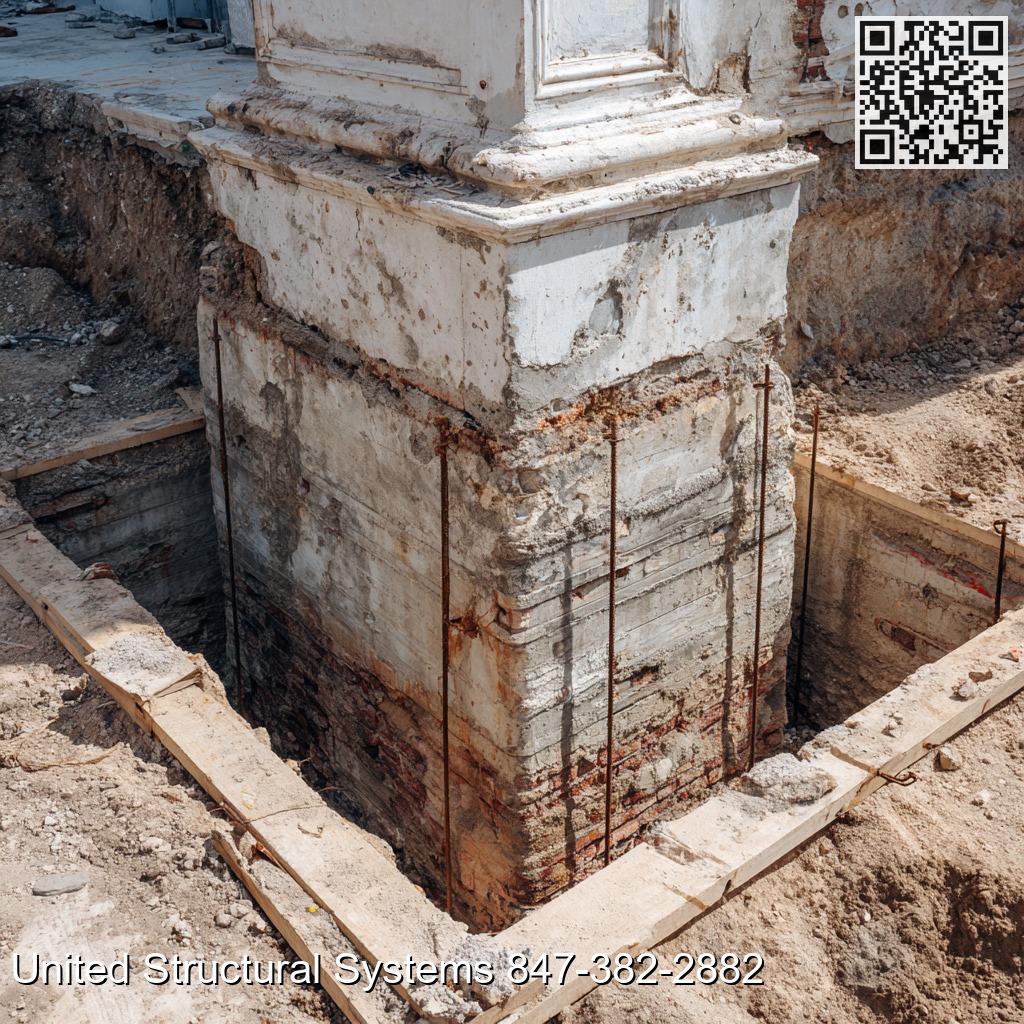
For commercial foundation stabilization underneath roof masts, low-headroom conditions drive the option. Quick lead parts and also extensions may serpent under existing ray of lights. The control variable ends up being torque head reaction as well as platform security throughout installment. Micropiles may be actually the far better match where access is actually also tighter as well as cement pipes can be managed indoors, but helical piles have the advantage of no damp job as well as quicker turnover.
Commercial helical tieback anchor installment for guyed towers
Guy anchors are entitled to special focus. A typical detail makes use of a helical tieback anchor put up at 35 degrees along with a number of coil plates sized for the uplift. The installer breakthroughs the anchor until target torque as well as embedment are met, after that connects to a steel grillage installed in a reinforced concrete block at quality. For high-capacity men, several tiebacks can be bundled to a singular grillage along with a spreader beam of light, enabling verboseness. The key points are placement with the individual tons, oxidation defense ahead, and also accurate tensioning. If the tieback position is actually steeper than intended, the vertical component of load increases and you may end up under-designed in uplift on the behind of the support team. Industry workers at times adjust slants to prevent a stone or a stashed line; ensure the design crew accept any sort of such improvements given that the angle mathematics transforms the called for capacity.
Edge situations and also trade-offs
- Expansive clay-baseds: Helical piles can bypass the active area when put in to depths past seasonal humidity swings. Still, adverse skin layer rubbing during shrink-swell cycles can eat on ability. If heave is actually significant, isolate the heap shaft coming from the swelling soil along with sleeves or utilize soft pipe sections through the energetic layer. Permafrost or even seasonally frosted dirts: Installment twist readings could be misinforming when frost-stiffened grounds create it look like capability is higher. Do work in thaw period or predrill via frost. Karst surface: Helical piles entering gaps may lose torque quickly as well as drop capability. Look at micropiles with cement to link spaces, or even utilize a bigger coil space that avoids tooth cavity zones identified through geophysics or exam borings. Seismic regions: Helical piles have prospered under periodic launching when correctly specified, but group effects and liquefaction should be actually resolved. If liquefaction is feasible, the support may lose surrounding soil help. Micropiles with deeper grouted connections right into thick or even stone levels may be a lot more reliable.
Installation workflow that keeps projects on schedule
Field logistics decide whether helical anchors supply the guaranteed routine cost savings. A self-displined staff can scoot, but cutting edges on design and torque logging erodes the high quality you are actually depending on. An easy, five-step rhythm helps the majority of high rise web sites:
- Stake sites with offsets, validate versus as‑built management, and clear powers along with suction potholing where needed. Pre-assemble lead areas and helices, confirm helix purchase and also spacing, and stage extensions so the driver never ever waits. Advance supports while logging deepness as well as twist every feet, pausing only to confirm that torque trends match dirt expectations. If torque spikes early, pull back and think about predrilling a pilot. Terminate at the indicated torque and also depth, set best altitudes, as well as immediately cap or shield crowns from water intrusion. Perform verification examinations and secure factors just before placing limits or grillage concrete, after that proceed with hats, backfill, as well as fella tensioning.
That tempo permits quick responses. If the first pair of supports set up in different ways than assumed, the area developer can adjust. That can easily imply modifying coil size, including a helix plate, or moving an anchor a few feet to prevent a stashed outdated footing that the examination pits missed.
Costs, purchase, and submittals that matter
Bid comparisons on helical work are slimy if you perform not specify acceptance. Demand submittals along with:
- Installer qualifications and also tools twist rankings with calibration certificates. Helix setups, shaft dimensions, and also rust security details. Proposed torque-to-capacity connection variables based on comparable ventures and soils, with a minimum of one load test reference. Testing plan along with approval standards for creep as well as displacement. Weld qualifications as well as product residential properties of the piles.
Unit prices ought to feature mobilization, setup every linear feet, proof screening, and scalp information. Look for exclusions on stone, predrilling, or even mess up disposal. If the web site has any possibility of rejection in the very first 10 feet, emphasize an alternative price for pilot gaps so you are not arranging in the mud.
On a latest commercial helical pile installation for a little urban monopole, specifying these items up front cut adjustment orders to near no as well as maintained the crane time to 1 day. On a different internet site along with a gentle hat over dense rocks, we arranged a crossbreed: helical piles for 2 lower legs and micropiles for the windward lower leg where refusal plagued the coils. Versatility beat dogma.
Repairing splits and also stabilizing existing foundations
Foundation gap repair work around tower stands is not aesthetic. An angled fracture at a bottom plate can signal tension beyond what the concrete may handle. If you view widening over times, check out anchor tension and also base motion together. Sewing gaps with epoxy alone is actually a band‑aid. Blend it with added deep-seated base elements where needed. For example, incorporate pair of mini heaps doweled in to a shaft under the pedestal, or even set up short helical piles via the slab tied in to a new band beam. Along with the brand-new help interacted, epoxy shot can bring back continuity as well as assist with distribution of tensions. Documentation the steel reinforcement format when you core, due to the fact that records on legacy towers are usually incomplete.
Long-term maintenance and monitoring
After building, the base vanishes from interest up until a breakdown. Incorporate it to the upkeep program. During the course of annual or even biannual high rise examinations, have teams:
- Visually check anchor heads as well as hats for rust, fractured cement, or action about grade. Verify guy tensions as well as compare to guideline documents. Unexpected adjustments can mention structure action or even prolongation in the tons path. Document any type of resolution pens or tilt readings. Tiny designs are usual; trends are not.
If creating a portfolio standard for commercial foundation stabilization throughout a number of high rise kinds, define typical inspection points and a simple data source to stash twist logs, lots exams, guy tensions, and also survey data. When hurricanes reach, you are going to understand which web sites are worthy of 1st attention.
Tying it back to the larger toolbox
Helical supports, helical piles, and also helical tieback anchors are main resources for modern tower bases. They sit alongside micropiles, protection stacks, and also conventional cement structures. The wise play is actually not to select a favorite, however to decide on based upon dirts, tons, get access to, and also risk. A trustworthy commercial helical pile installation in silty sands are going to top a limited micropile work that battled blockages all full week. A well-maintained micropile installation in frosty till will beat a helical task that made an effort to eat through cobbles and invested times predrilling. For commercial resistance pile installation, believe retrofit as well as deep foundation repair where the existing design gives response and space is tight.
The ideal tasks are actually the ones where layout, field testing, and also installation align. Get the geotechnical search right, define approval early, and partner with installers that log twist and test tons as opposed to estimate. For interaction towers and commercial masts, that style equates directly into uptime, far fewer site visits, and also constructs that persevere when the climate is actually unkind.